Terafab: Inside Tesla’s $25 Billion Bet on Building Its Own Chips
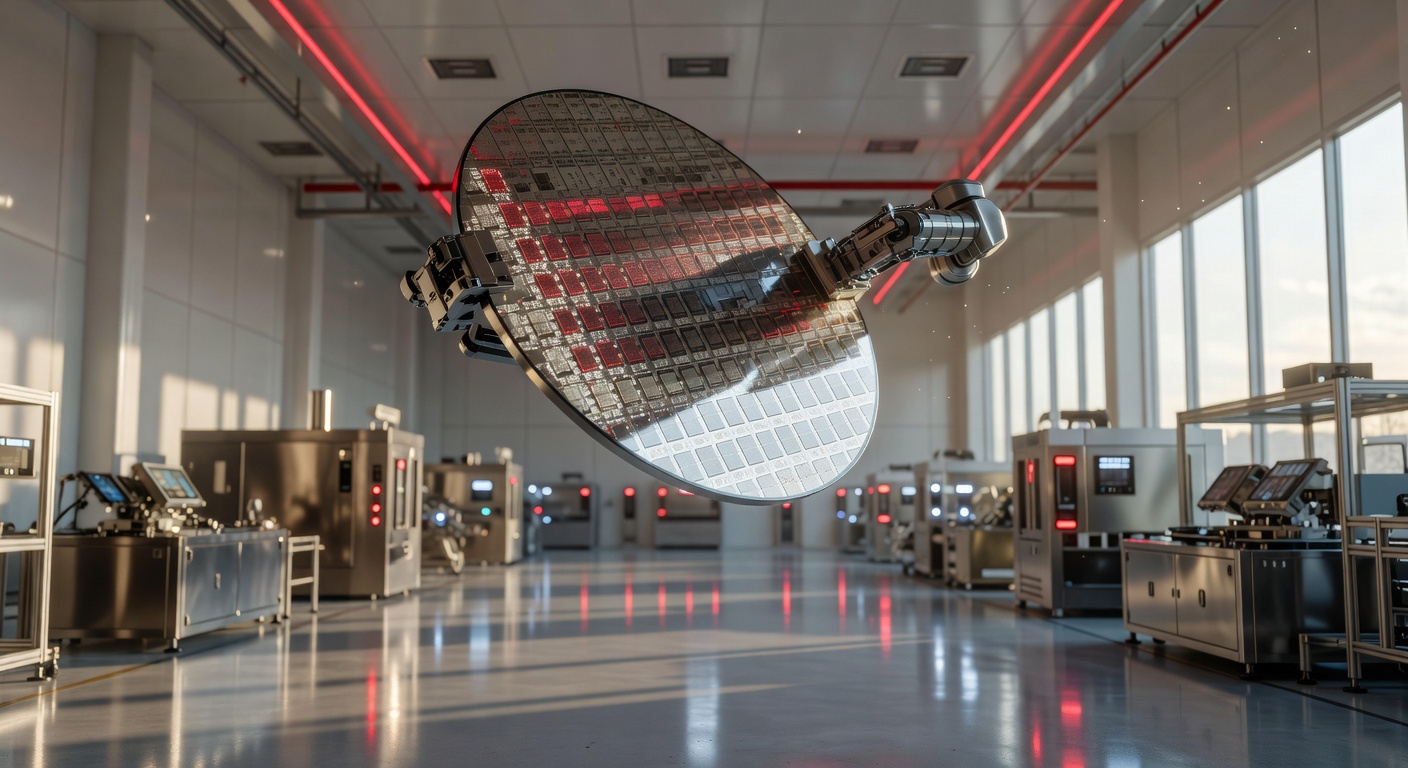
On March 21, 2026, Elon Musk stood inside Austin’s defunct Seaholm Power Plant and announced what he called “the most epic chip building exercise in history by far.” The project is Terafab – a $20-25 billion joint venture between Tesla, SpaceX, and xAI designed to produce custom AI and memory chips at a scale that dwarfs anything currently operating on Earth. If built as described, a single facility would output roughly 70% of TSMC’s entire global production capacity.
The rationale is blunt. Musk told the audience that existing semiconductor manufacturers – TSMC, Samsung, Micron, and others – simply cannot expand fast enough to meet the chip demands of his interconnected empire of electric vehicles, humanoid robots, autonomous driving software, and orbital AI satellites. “We either build the Terafab or we don’t have the chips, and we need the chips, so we build the Terafab,” he said. He estimated that all current fabrication facilities on Earth produce only about 2% of what his companies will eventually require.
The announcement has drawn reactions ranging from awe to deep skepticism. What follows is a comprehensive breakdown of what Terafab actually is, what it aims to produce, and why many industry observers remain cautious about the most ambitious semiconductor project ever proposed by a company with zero chip fabrication experience.
What Terafab Actually Is
Terafab is a vertically integrated semiconductor fabrication facility planned for the North Campus of Giga Texas in Austin, Texas. Unlike traditional chip manufacturing, which distributes design, lithography, fabrication, memory production, packaging, and testing across multiple sites and companies, Terafab consolidates every stage under one roof. Musk claims this capability does not exist anywhere else in the world.
The facility will technically comprise two specialized fabs, each dedicated to a single chip design. One will produce edge inference chips for Tesla vehicles and Optimus humanoid robots. The other will manufacture D3 chips custom-designed for SpaceX’s orbital AI satellite constellation. The project targets 2-nanometer process technology – the most advanced node currently entering commercial production globally.
“Terafab will technically be two fabs, each making only one chip design,” Musk confirmed in a post on X following the announcement. This single-design-per-fab approach is intended to optimize yield and scaling for the specific demands of AI inference and space-hardened computing.
Production Targets and Scale
The numbers Musk presented are staggering, even by the standards of an industry accustomed to enormous capital expenditure.
| Metric | Initial Target | Full Capacity |
|---|---|---|
| Wafer starts per month | 100,000 | 1,000,000 |
| Annual chip output | Not specified | 100-200 billion custom AI/memory chips |
| Annual compute power | – | 1 terawatt (1 trillion watts) |
| Estimated cost | $20-25 billion | |
| Process node | 2nm | |
For context, one million wafer starts per month at full capacity would represent approximately 70% of TSMC’s current global output – from a single facility operated by companies that have never fabricated a chip. The 1 terawatt annual compute target is roughly 50 times what Musk estimates all major chip manufacturers currently produce for AI applications, which he pegged at about 20 gigawatts.
Tesla’s corporate account stated that Terafab’s output would exceed “all the chip manufacturers in the world combined” today, and even by 2030 based on projected production growth.
The Chips: AI5 for Earth, D3 for Space
Terafab will produce two categories of semiconductors, each optimized for radically different operating environments.
AI5 Inference Chips
The first chip type targets Tesla’s terrestrial AI stack. The AI5 chip – the next-generation inference processor – will pack 40x to 50x more compute performance and 9x more memory than its predecessor, the AI4. It is designed to power Full Self-Driving software, the Cybercab robotaxi program, and the Optimus humanoid robot line. Small-batch production of the AI5 is expected in 2026, with volume production projected for 2027.
It’s worth noting that Tesla has already experienced delays on this front. The AI5 was previously pushed to mid-2027 before the Terafab announcement, and the AI6 chip has slipped roughly six months due to Samsung’s own 2nm production challenges – precisely the kind of external vulnerability Terafab is meant to eliminate.
D3 Space Chips
The second chip type is purpose-built for the hostile environment of low Earth orbit. These D3 chips must withstand high-energy ions, photons, and electron buildup while running hotter than terrestrial designs to minimize radiator mass on satellites. Musk said 80% of Terafab’s total compute output would be directed toward these space-based orbital AI satellites, with only 20% serving ground applications.
The underlying argument is that solar irradiance in space is roughly five times greater than at Earth’s surface, and that vacuum conditions make thermal management more scalable. Musk projected that running AI workloads in orbit could become cheaper than terrestrial alternatives within two to three years. “We’re starting a galactic civilization,” he declared.
The Rapid Iteration Advantage
Beyond raw scale, Musk emphasized a structural advantage that Terafab’s all-under-one-roof design would provide: speed of iteration.
“To the best of my knowledge, this doesn’t exist anywhere in the world, where you’ve got everything necessary to build logic memory and do packaging and test it, and then do the photomasks, improve the masks, and just keep looping it,” Musk said during the presentation. Photomasks are the templates used to print circuits onto silicon, and the ability to revise them on-site without shipping wafers between facilities could enable design-test-revise cycles that are dramatically faster than the industry standard.
This rapid recursive loop is central to the Terafab pitch. Traditional chip development involves sending designs to one facility, wafers to another, and packaging to a third, with weeks or months lost in transit and coordination. Terafab’s integrated approach could compress that timeline significantly – at least in theory.
Why Skeptics Have Good Reason to Doubt
The ambition is extraordinary. So is the gap between ambition and execution capability.
Tesla, SpaceX, and xAI have zero semiconductor manufacturing experience. TSMC spent decades and hundreds of billions of dollars building its fabrication empire. Its six Arizona fabs alone carry a $165 billion price tag and won’t reach 2nm production until 2029. A single 2nm fab with 50,000 wafer starts per month costs roughly $28 billion and takes approximately 38 months to build in the United States. Terafab proposes to do far more, far faster, with far less experience.
The comparison to Tesla’s 4680 battery program is instructive. In September 2020, Musk promised a battery manufacturing revolution with dry electrode technology, targeting 10 GWh within a year and 3 TWh by 2030. More than five years later, the program has delivered an estimated 2% of its original volume goal. The dry electrode process required six or seven revisions. Tesla’s own top battery supplier publicly stated that Musk “doesn’t know how to make battery cells.”
- Battery cell manufacturing is difficult. Leading-edge chip fabrication is orders of magnitude harder.
- Building a state-of-the-art fab requires complex cleanroom infrastructure, extreme ultraviolet lithography tools from ASML (which can only produce a limited number per year), and an incredibly skilled workforce.
- Musk has a documented pattern of overpromising on timelines – the AI5 and AI6 delays being the most recent examples.
- Tesla’s CFO acknowledged that the full Terafab cost is not yet incorporated into Tesla’s 2026 capital expenditure plan, which already exceeds $20 billion.
Musk has also floated the idea that conventional cleanroom designs may not be necessary for future fabs, suggesting wafer-level isolation could replace room-scale contamination control. Industry experts caution that while this concept has theoretical merit, high-precision fabs still depend on controlled environments to maintain yield and reliability.
The Bigger Strategic Picture
Terafab doesn’t exist in isolation. It is the capstone of a series of moves Musk has made across his companies over the past two years.
SpaceX acquired xAI in an all-stock deal in February 2026, making SpaceX the world’s most valuable private company at a reported $1.25 trillion valuation, with an IPO anticipated in Q2 2026. The merger enables the integration of xAI’s artificial intelligence capabilities with SpaceX’s satellite infrastructure – and Terafab provides the silicon to power both.
Musk’s vision extends well beyond cars and chatbots. He projected that Tesla will eventually produce 10 to 100 times as many Optimus robots as electric vehicles – potentially scaling to 10 billion robots per year. Each robot requires AI inference chips. Each satellite in SpaceX’s planned orbital data center constellation requires space-hardened processors. The math, as Musk frames it, makes in-house fabrication not a luxury but a survival requirement.
At the same time, Tesla’s core automotive business faces headwinds. Sales declined for the second consecutive year in 2025, with significant drops in Europe and the company’s first-ever annual decline in China. Some observers view the Terafab announcement as partly designed to attach Tesla’s narrative to the AI hyperscaler boom at a moment when the car business needs a compelling growth story.
Terafab vs. Traditional Foundries
| Factor | Terafab (Tesla/SpaceX/xAI) | TSMC/Samsung (Traditional) |
|---|---|---|
| Scale from single site | 1M wafer starts/month (70% of TSMC global) | Distributed across dozens of fabs worldwide |
| Integration | All-in-one: design through testing | Separate sites; multi-week iteration loops |
| Chip focus | Custom AI5/D3 for autos, robots, space | Broad foundry serving hundreds of customers |
| Fab experience | None | Decades; hundreds of billions invested |
| Annual compute target | 1 terawatt | ~20 GW (current global AI chip output) |
| Workforce model | Millions of Optimus robots for construction/ops | Tens of thousands of skilled human workers |
The workforce element is particularly notable. Musk stated that millions of Optimus humanoid robots would help build and operate Terafab – a claim that itself depends on the very chips Terafab is supposed to produce. The circular dependency has not gone unnoticed by critics.
What Comes Next
No firm timeline has been given for when Terafab will begin producing chips at scale or when the full facility will be operational. Small-batch AI5 production is expected in 2026, with volume ramping in 2027. But even optimistic industry estimates suggest that a fab of this complexity would take three to five years to build, and that assumes everything goes right – a generous assumption for first-time fabricators.
Musk has confirmed that Tesla, SpaceX, and xAI will continue purchasing chips from TSMC, Samsung, and Micron in the interim, and that he would like those suppliers to expand as quickly as possible. Terafab is the long game – a decade-long infrastructure bet that, if successful, could make Musk’s companies self-sufficient in the most critical technology of the AI era.
If it fails, it joins the 4680 battery, the Hyperloop, and the original Cybertruck timeline in the growing catalog of Musk ambitions that collided with physical reality. The semiconductor industry will be watching closely – not just the output numbers and timelines, but how Tesla navigates the extraordinary technical challenges of cleanroom engineering, EUV lithography, yield optimization, and process control at 2nm. The stakes, at $25 billion, have never been higher.
Sources
- Tesla and SpaceX announce $25B Terafab chip factory
- Musk announces chip manufacturing plans for SpaceX and Tesla
- Musk unveils chip manufacturing plans – TechCrunch
- Musk unveils $20B TeraFab chip project – Tom’s Hardware
- What is Musk’s Terafab chip project? – CBS News
- Tesla’s Terafab chip factory launch details
- Inside the $20B AI chip factory – Teslarati
- Musk’s Terafab: massive AI chip plant plans – New Atlas
- Musk launches Terafab Tesla-SpaceXAI chip factory
- Tesla Terafab Project: What we know – Basenor