OpenAI Codex Desktop App - The New macOS Command Center
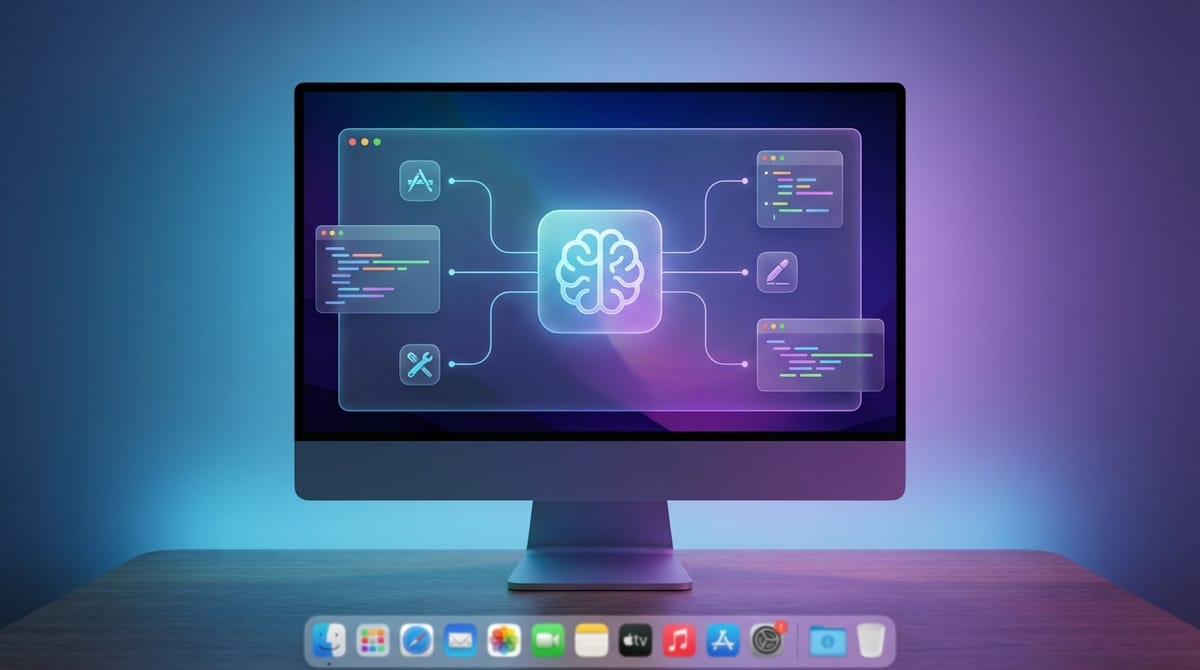
Software development has entered a new phase where AI agents don't just assist with code completion - they manage entire projects, coordinate complex workflows, and operate autonomously for hours or days at a time. OpenAI's latest release, the Codex macOS app, represents a fundamental shift in how developers interact with artificial intelligence, moving beyond the limitations of browser-based chat interfaces to a dedicated command center designed for orchestrating multiple AI agents simultaneously.
Launched in early February 2026, the Codex desktop application addresses a critical challenge that emerged as AI capabilities advanced: developers now have access to models that can handle sophisticated, long-running tasks, but they lacked effective tools to organize, supervise, and collaborate with these agents at scale. The new macOS app fills this gap by providing a native interface where teams of AI agents can work in parallel on different aspects of a project, each operating in isolated environments while remaining coordinated through a central hub.
The timing of this release is strategic. With competition intensifying from GitHub Copilot, Claude Code, and Google's Jules, OpenAI is positioning Codex not merely as a coding assistant but as a comprehensive platform for agentic workflows. More than one million developers have already adopted the platform since the rollout of the GPT-5.2-Codex model in December 2025, signaling strong demand for tools that can manage complexity beyond what traditional AI chat interfaces offer.
The Architecture Behind Multi-Agent Coordination
The Codex macOS app is built on the GPT-5.2-Codex model, a specialized derivative trained specifically to understand complex software architectures and file dependencies. Unlike generic language models, this version maintains a 400,000-token context window, allowing it to hold the structure of entire repositories in memory simultaneously rather than just individual files. This massive context capacity enables agents to understand relationships between components, trace dependencies across modules, and make informed decisions about how changes in one area might affect others.
The model can generate up to 128,000 output tokens in a single pass, which translates to the ability to produce entire modules or extensive refactorings without interruption. This output capacity is crucial for long-running tasks where agents need to maintain coherence across large code generation sessions. Each agent operates independently for up to 30 minutes before returning completed work, giving them sufficient autonomy to tackle substantial problems without constant human intervention.
What distinguishes this architecture from previous AI coding tools is the emphasis on parallel operation. Traditional AI assistants handle one task at a time, requiring developers to manually switch contexts between browser tabs, text editors, and terminal windows. The Codex app eliminates this friction by allowing multiple agents to work on different tasks simultaneously within the same environment, each organized within separate threads and projects.
Isolated Worktrees and Safe Experimentation
One of the most significant technical features is the built-in support for isolated worktrees. Each agent works on a separate copy of the repository, preventing conflicts when multiple agents operate on the same codebase. This isolation enables developers to explore different coding approaches in parallel without risking the stability of the main branch or interfering with other agents' work.
The practical implications are substantial. A developer might deploy one agent to refactor a legacy module while another agent explores a new feature implementation and a third investigates a performance optimization - all simultaneously, all safely isolated. When an agent completes its work, the results appear in a review queue where developers can inspect changes, comment on diffs, or open files in their preferred editor to make manual adjustments. This workflow preserves human oversight while maximizing the throughput of AI-assisted development.
The app maintains session history and configuration from Codex's command-line interface and IDE extensions, allowing developers to continue working with existing projects without reconfiguration. This continuity is essential for teams that have already integrated Codex into their development workflows through other interfaces.
Skills: Extending Beyond Code Generation
While code generation remains central to Codex's functionality, the platform has evolved to support a broader concept called "skills" - bundled instructions, resources, and scripts that enable agents to perform specialized tasks. These skills can be explicitly selected by users or automatically invoked by Codex based on the nature of the task at hand.
Skills extend the platform's utility well beyond traditional coding. Agents can gather and synthesize information from multiple sources, write technical documentation, create design documents, perform bug triage, manage cloud deployments, and even handle creative work like game design. OpenAI demonstrated this versatility by having Codex independently build and test a complete 3D racing game using a combination of code generation and image creation skills, with the agent managing design, development, and testing throughout a long-running session.
The skills framework integrates with external services including Cloudflare, Netlify, Render, Vercel, Figma, and GPT Image. This connectivity allows agents to deploy applications directly to hosting platforms, import design specifications from Figma projects, or generate visual assets as needed during development. The result is a more comprehensive automation of the software development lifecycle, from initial concept through deployment and maintenance.
For teams with recurring needs, Codex supports automations - scheduled tasks that run in the background without active supervision. When an automation completes, its output appears in the review queue for inspection or further action. This capability is particularly valuable for routine maintenance tasks like dependency updates, security patches, or periodic code quality audits.
Security Model and Permission Controls
The Codex app implements system-level sandboxing by default, addressing legitimate concerns about giving AI agents broad access to development environments. Agents are restricted to editing files within their assigned folders or branches and can only access cached web search results unless explicitly granted additional permissions.
Commands requiring elevated privileges - such as network access, system modifications, or operations outside the designated workspace - trigger approval prompts. Developers can configure rules at the team or project level to streamline these permissions for trusted operations while maintaining strict controls over potentially risky actions. This permission model strikes a balance between enabling agent autonomy and preventing unauthorized or unintended system changes.
The security architecture reflects a broader industry recognition that as AI agents become more capable and autonomous, the potential consequences of errors or misconfigurations increase proportionally. By implementing granular controls and explicit approval workflows, OpenAI aims to make Codex suitable for enterprise environments where security and compliance requirements are stringent.
User Experience and Interface Design
The macOS app provides a ChatGPT-like interface that will feel familiar to users of OpenAI's other products, but adapted specifically for development workflows. Agents are organized within threads that can be switched without losing context, allowing developers to maintain multiple concurrent workstreams. As project status changes, notifications appear in the interface to keep users informed of progress without requiring constant monitoring.
The app also supports different agent personalities, currently limited to pragmatic or conversational styles. While this feature may seem cosmetic, it reflects an understanding that human-AI collaboration involves social and communicative dimensions beyond pure functionality. Some developers may prefer terse, technical responses while others benefit from more explanatory, conversational interactions.
The native macOS implementation enables access to system features and workflows that aren't easily available from browser-based tools. This includes deeper integration with file systems, native notifications, background processing capabilities, and the ability to invoke system-level tools and utilities directly from agent workflows.
Availability and Access Tiers
The Codex app is currently exclusive to macOS, with Windows and Linux versions planned for future release. Users with ChatGPT Plus, Pro, Business, Enterprise, or Edu subscriptions can access Codex across the desktop app, IDE extensions, command-line interface, and web using their existing ChatGPT credentials.
In a strategic move to broaden adoption and compete more effectively with rival platforms, OpenAI has made Codex temporarily available to ChatGPT Free and Go users. This promotional period allows a wider audience to experience the platform's capabilities, potentially converting free users to paid tiers once they've integrated Codex into their workflows. During this period, rate limits for paid plans have been doubled, with options to purchase additional credits for users who exceed their allocations.
The tiered access model reflects the computational costs associated with running multiple long-duration agents simultaneously. The 400,000-token context window and 128,000-token output capacity require substantial processing resources, making unlimited free access economically unfeasible while still allowing OpenAI to demonstrate value to potential customers.
Real-World Performance and Early Feedback
OpenAI co-founder Sam Altman publicly shared his experience building an app with Codex, noting that when he asked the system for feature suggestions, several recommendations exceeded his own ideas. This anecdote illustrates the platform's potential to function not just as an implementation tool but as a collaborative partner in the design process.
The surge in adoption following the GPT-5.2-Codex model release - reaching over one million developers across organizations of various sizes - suggests strong market demand. However, early user feedback reveals areas where the platform still requires refinement. Some developers report issues with speed, coding errors, and output quality. Others note the introduction of bugs or a lack of contextual understanding of intent compared to competing tools like Claude.
These challenges are typical of emerging technology in a rapidly evolving space. The gap between impressive demonstrations and consistent, production-ready performance remains a common theme across AI development tools. As OpenAI continues to refine the models and incorporate user feedback, these issues will likely diminish, though the fundamental tension between agent autonomy and reliability will persist as a central challenge in agentic AI development.
Implications for Software Development
The Codex macOS app represents a meaningful step toward a future where software development involves orchestrating teams of AI agents rather than writing every line of code manually. This shift has profound implications for how development teams are structured, how projects are managed, and what skills will be most valuable for developers.
For individual developers and small teams, the ability to deploy multiple agents working in parallel effectively multiplies available development capacity. Tasks that previously required sequential attention can now progress simultaneously, potentially accelerating development cycles significantly. The automation of routine work - bug triage, documentation, deployment - frees human developers to focus on higher-level architecture, product decisions, and creative problem-solving.
For larger organizations, the platform's enterprise features and security controls make it feasible to integrate AI agents into existing development workflows without compromising compliance requirements. The ability to configure permission rules at the team or project level allows organizations to customize the balance between agent autonomy and human oversight based on the sensitivity and criticality of different codebases.
The broader consumer impact may be less visible but equally significant. As development teams offload routine and time-consuming work to AI agents, the pace at which applications and digital services can be updated, fixed, or expanded should accelerate. Features that once required weeks of development time might be implemented in days. Bug fixes and security patches could be deployed more rapidly. The overall quality and responsiveness of software products should improve as AI agents handle the tedious aspects of maintenance and enhancement.
Conclusion
The OpenAI Codex macOS app marks a transition point in AI-assisted development, moving from single-agent chat interfaces to multi-agent command centers capable of managing complex, long-running projects. With its 400,000-token context window, support for parallel isolated worktrees, extensible skills framework, and robust security model, the platform addresses real challenges that emerged as AI capabilities outpaced the tools available to harness them effectively.
While early feedback indicates room for improvement in consistency and reliability, the rapid adoption by over one million developers demonstrates strong market validation. The temporary availability to free users and doubled rate limits for paid subscribers reflect OpenAI's determination to establish Codex as the leading platform in an increasingly competitive landscape that includes formidable alternatives from GitHub, Anthropic, and Google.
For developers, the platform offers a glimpse of a future where human expertise focuses on architecture, strategy, and creative problem-solving while AI agents handle implementation, testing, documentation, and deployment. The success of this vision depends not just on continued improvements in model capabilities but on refining the interfaces, workflows, and control mechanisms that allow humans and AI agents to collaborate effectively at scale. The Codex macOS app represents OpenAI's current answer to that challenge, and its evolution will likely shape how the broader industry approaches agentic AI development tools.
Sources
- ITPro - OpenAI's Codex app is now available on macOS
- Business Standard - OpenAI released Codex app for macOS
- TechRadar - OpenAI reveals Codex app for Mac
- Gadgets 360 - OpenAI Codex App for macOS Agentic Coding Introduced
- Computerworld - OpenAI drops Codex agentic AI as a macOS app
- AI Rockstars - OpenAI releases native Codex app for macOS