Claude on Mars: AI Plans Perseverance Rover Drives
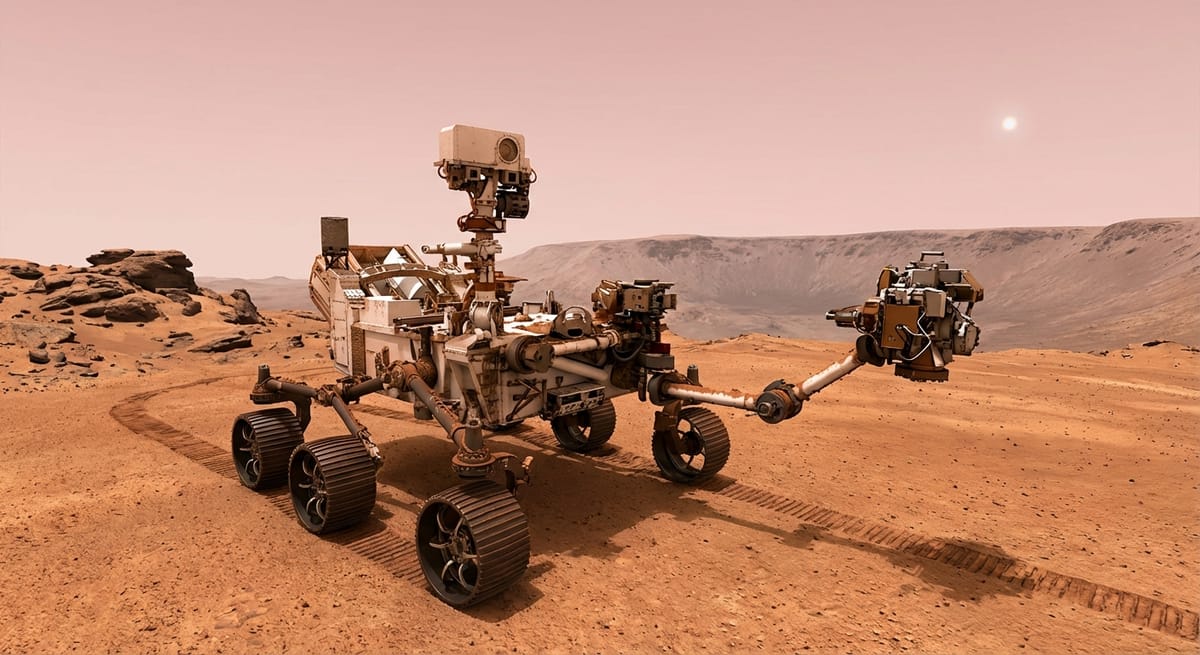
On December 8 and 10, 2025, NASA's Perseverance rover made history by completing the first drives on another world planned entirely by artificial intelligence. This groundbreaking achievement, executed through a collaboration between NASA's Jet Propulsion Laboratory and Anthropic's Claude AI system, represents a fundamental shift in how humanity explores distant planets. The rover successfully navigated approximately 400 meters through the rocky terrain of Jezero Crater, following waypoints generated not by human mission planners, but by a generative AI model that analyzed satellite imagery and terrain data to chart a safe path across the Martian surface.
The demonstration addresses one of the most persistent challenges in planetary exploration: the communication delay between Earth and Mars. With signals taking roughly 20 minutes to travel between the two planets, real-time control of rovers is impossible. Mission planners have traditionally spent hours meticulously plotting routes using orbital images and rover data, creating a series of waypoints that the rover follows autonomously. This manual process, while effective, limits the efficiency and range of daily operations. By delegating route planning to AI, NASA opens the door to longer, more ambitious drives and potentially faster scientific discovery.
The success of this test represents more than just a technological milestone. It signals a future where artificial intelligence becomes an essential partner in managing the complex operations required to explore distant planetary surfaces, potentially transforming how we conduct science on worlds millions of miles from home.
The Challenge of Driving on Mars
Operating a rover on Mars presents unique obstacles that don't exist in terrestrial robotics. The communication delay means that by the time operators on Earth see what the rover is experiencing, those conditions may have already changed. This fundamental constraint forces mission teams to plan drives in advance, creating detailed navigation sequences that the rover executes autonomously over the course of a Martian day, or sol.
Traditional route planning requires human experts to analyze high-resolution orbital imagery from spacecraft like the Mars Reconnaissance Orbiter, study digital elevation models to understand slope and terrain characteristics, identify potential hazards such as boulder fields and sand ripples, and then manually designate a series of waypoints that form a safe path. This process, while refined over decades of Mars exploration, is time-intensive and limits how far the rover can travel in a single sol. Each waypoint represents a location where the rover pauses to receive new instructions, creating a breadcrumb trail across the Martian landscape.
The complexity multiplies when considering scientific objectives. Mission planners must balance safety with the desire to reach geologically interesting targets, avoid areas that might trap the rover's wheels, and optimize the route for energy efficiency. Human planners excel at this multifaceted decision-making, but the process inherently limits operational tempo.
How Claude Learned to Navigate Mars
The JPL team approached the challenge by providing Claude with the same data and imagery that human rover planners use daily. This included high-resolution orbital photographs from NASA's HiRISE camera system, digital elevation models showing the three-dimensional topography of the terrain, and years of accumulated mission data that helped the AI understand what constitutes safe versus hazardous terrain on Mars.
Claude's vision capabilities allowed it to analyze these images and identify terrain features that pose risks to the rover. The AI learned to recognize boulder fields that could damage the rover or impede progress, sand ripples that might cause the wheels to slip or become stuck, steep slopes that exceed the rover's climbing capabilities, and other obstacles that mission planners routinely avoid. Beyond hazard identification, Claude generated a continuous path with specific waypoints that Perseverance could follow, producing navigation commands in Rover Markup Language, the specialized programming format that NASA systems use to control the vehicle.
This wasn't a simple point-to-point navigation task. The AI needed to understand terrain traversability, optimize the route for both safety and efficiency, generate waypoints at appropriate intervals, and produce commands compatible with existing mission infrastructure. The fact that Claude could perform all these functions using the same inputs available to human planners demonstrates the maturity of modern AI vision and reasoning capabilities.
From Simulation to Reality
Before sending any AI-generated commands across 140 million miles of space to a multi-billion-dollar spacecraft, JPL engineers subjected Claude's route plan to rigorous validation. The team used a digital twin of Perseverance, a virtual replica that simulates the rover's systems and behavior in extraordinary detail. This simulation environment allowed engineers to test the AI-generated route against more than 500,000 variables that could affect the rover's performance and safety.
The validation process revealed that Claude's initial plan was remarkably sound, requiring only one minor adjustment after the simulated tests. This level of accuracy on the first attempt exceeded expectations and demonstrated that the AI had genuinely learned to understand Martian terrain in ways comparable to experienced human planners. The digital twin testing gave mission controllers confidence that the route would work in the actual Martian environment, where there's no opportunity for a quick fix if something goes wrong.
On December 8, Perseverance executed the first portion of the AI-planned route, traveling 689 feet across the Martian surface. Two sols later, on December 10, the rover completed the second segment, covering an additional 807 feet. Both drives proceeded without issues, with the rover successfully navigating the rocky terrain near the rim of Jezero Crater exactly as Claude had planned. The total distance of approximately 1,500 feet represented a significant test of AI-driven navigation in an extraterrestrial environment.
Technical Architecture and Integration
The implementation of Claude at JPL required careful integration with existing mission infrastructure. The AI system didn't replace the entire mission planning workflow but rather augmented it, taking on the specific task of route generation while human engineers maintained oversight and verification responsibilities. This human-AI collaboration model represents a pragmatic approach to introducing advanced AI capabilities into high-stakes operational environments.
Engineers provided Claude with context through years of mission data, essentially giving the AI a comprehensive education in Mars rover operations. This contextual knowledge allowed Claude to make informed decisions that accounted for the rover's capabilities, limitations, and mission objectives. The AI generated high-level navigation instructions that were then translated into precise waypoints by mission systems before transmission to Mars across the vast interplanetary distance.
The use of Rover Markup Language output was particularly significant. Rather than producing generic navigation instructions that would require human translation, Claude generated commands in the exact format used by NASA's rover control systems. This direct compatibility streamlined the validation process and demonstrated the AI's ability to work within established technical frameworks rather than requiring entirely new infrastructure.
Implications for Future Mars Missions
The successful demonstration of AI-driven route planning opens numerous possibilities for enhancing Mars exploration. Longer daily drives become feasible when route planning no longer consumes extensive human labor hours. Mission teams could potentially plan multiple sols in advance, allowing the rover to cover greater distances and reach scientifically valuable targets more quickly. This increased operational efficiency could significantly expand the scientific return from existing and future Mars missions.
Beyond simple navigation, AI systems like Claude could eventually identify scientifically interesting features in rover imagery autonomously, suggesting targets for investigation without waiting for human analysis. This capability would be particularly valuable during long communication blackouts or when the rover encounters unexpected geological formations. The AI could flag these discoveries and even begin preliminary investigations while mission scientists are offline or focused on other tasks.
Future Mars missions might incorporate AI planning from the outset rather than retrofitting the technology to existing operations. Rovers could be designed with AI-driven autonomy as a core capability, potentially allowing for more ambitious mission profiles that venture into challenging terrain currently considered too risky for traditional planning methods. The technology could also scale to support multiple rovers operating simultaneously, with AI systems coordinating their movements and scientific activities across a wider area than human teams could efficiently manage.
Broader Context in Space AI Applications
The Perseverance demonstration represents one application of a broader trend toward artificial intelligence in space exploration. NASA and other space agencies are investigating AI for numerous mission-critical functions, from autonomous satellite operations to spacecraft fault detection and recovery. The unique constraints of space operations - communication delays, limited human oversight, and the need for rapid decision-making in unpredictable environments - make AI an increasingly valuable tool.
What distinguishes the Claude implementation is its use of a general-purpose AI model rather than a system specifically designed for rover navigation. Traditional space AI applications have typically relied on narrow, purpose-built algorithms trained for specific tasks. Claude's success demonstrates that modern large language models with vision capabilities can be adapted to highly specialized technical applications, potentially accelerating the deployment of AI across various space mission functions.
This approach also offers practical advantages. As AI models like Claude continue to improve through ongoing development, space missions could benefit from those advances without requiring entirely new systems. Updates and enhancements to the base model could translate into better performance for space applications, creating a pathway for continuous improvement that doesn't exist with static, purpose-built systems.
Challenges and Considerations
Despite the successful demonstration, integrating AI into Mars rover operations raises important considerations. Verification and validation remain critical - every AI-generated plan must undergo thorough review before execution. The consequences of navigation errors on Mars are severe, potentially ending a mission worth billions of dollars and years of scientific work. Human oversight will remain essential for the foreseeable future, with AI serving as a powerful tool rather than a complete replacement for human expertise.
The communication delay between Earth and Mars also means that if something goes wrong during an AI-planned drive, human operators cannot intervene immediately. Perseverance does have onboard autonomous navigation capabilities that allow it to avoid unexpected obstacles, but these systems operate within the framework of the overall route plan. Ensuring that AI-generated plans account for worst-case scenarios and provide appropriate safety margins requires careful engineering and extensive testing.
There's also the question of how AI planning integrates with scientific decision-making. While Claude can generate safe, efficient routes, the selection of where to drive and what to investigate ultimately depends on scientific priorities determined by human researchers. The AI must work within these constraints, optimizing execution of human-defined objectives rather than setting its own agenda. Balancing AI autonomy with scientific oversight represents an ongoing challenge as these systems become more capable.
Looking Ahead
NASA officials have indicated that this demonstration represents just the beginning of AI integration into Mars rover operations. The success with Perseverance provides a foundation for expanding AI applications to other aspects of mission planning and execution. Future tests might explore AI assistance with scientific target selection, sample collection planning, or even autonomous responses to unexpected discoveries.
The technology could prove particularly valuable for upcoming Mars Sample Return missions, which will require complex coordination between multiple spacecraft and rovers. AI systems could help manage the intricate choreography of sample collection, transfer, and launch operations, reducing the burden on human mission teams and potentially enabling more ambitious sample collection strategies.
Beyond Mars, the principles demonstrated with Claude could apply to exploration of other worlds. Future missions to the moons of Jupiter or Saturn, where communication delays stretch to hours rather than minutes, would benefit even more dramatically from AI-driven autonomy. The ability to plan and execute complex operations with minimal human intervention becomes increasingly essential as humanity ventures deeper into the solar system.
The collaboration between JPL and Anthropic also suggests a model for how space agencies might work with commercial AI developers to accelerate technological advancement. Rather than developing all capabilities in-house, NASA can leverage cutting-edge AI systems developed by industry, adapting them for space applications through targeted collaboration. This approach could speed the integration of AI into space exploration while allowing NASA to focus resources on mission-specific challenges that commercial developers don't address.
Conclusion
The successful completion of AI-planned drives by NASA's Perseverance rover marks a watershed moment in space exploration. By demonstrating that artificial intelligence can perform complex route planning tasks traditionally reserved for human experts, the December 2025 test opens new possibilities for more efficient, ambitious Mars missions. Claude's ability to analyze terrain, identify hazards, and generate safe navigation paths using the same data available to human planners shows that AI has matured to the point where it can serve as a genuine partner in planetary exploration.
The implications extend beyond Mars. As humanity plans missions to more distant destinations with longer communication delays and harsher environments, AI autonomy will transition from a useful enhancement to an essential capability. The lessons learned from integrating Claude into Perseverance operations will inform how future missions incorporate artificial intelligence from the ground up, potentially enabling exploration scenarios that would be impractical or impossible with traditional human-in-the-loop planning.
This achievement also exemplifies the productive collaboration possible between government space agencies and commercial AI developers. By bringing together JPL's deep expertise in Mars rover operations with Anthropic's advanced AI capabilities, the partnership created something neither organization could have achieved alone. As space exploration becomes increasingly complex and ambitious, such collaborations will likely become more common, accelerating the pace of technological innovation and scientific discovery across the solar system.
Sources
- NASA JPL - Perseverance Rover Completes First AI-Planned Drive on Mars
- Anthropic - Claude on Mars
- Space.com - NASA's Perseverance Mars Rover Completes Its 1st Drive Planned by AI
- ScienceDaily - AI-Planned Mars Rover Drive
- Engadget - NASA Used Claude to Plot a Route for Its Perseverance Rover on Mars
- The News - Anthropic's Claude AI Plans Mars Route for NASA's Perseverance Rover
- Geo.tv - NASA's Perseverance Rover Completed First Ever AI-Planned Drive on Mars
- Gadgets 360 - NASA Perseverance Rover Mars Claude AI Command